Five Centuries of Coffee Wisdom: The Ancient Craft Modern Baristas Are Finally Catching Up To
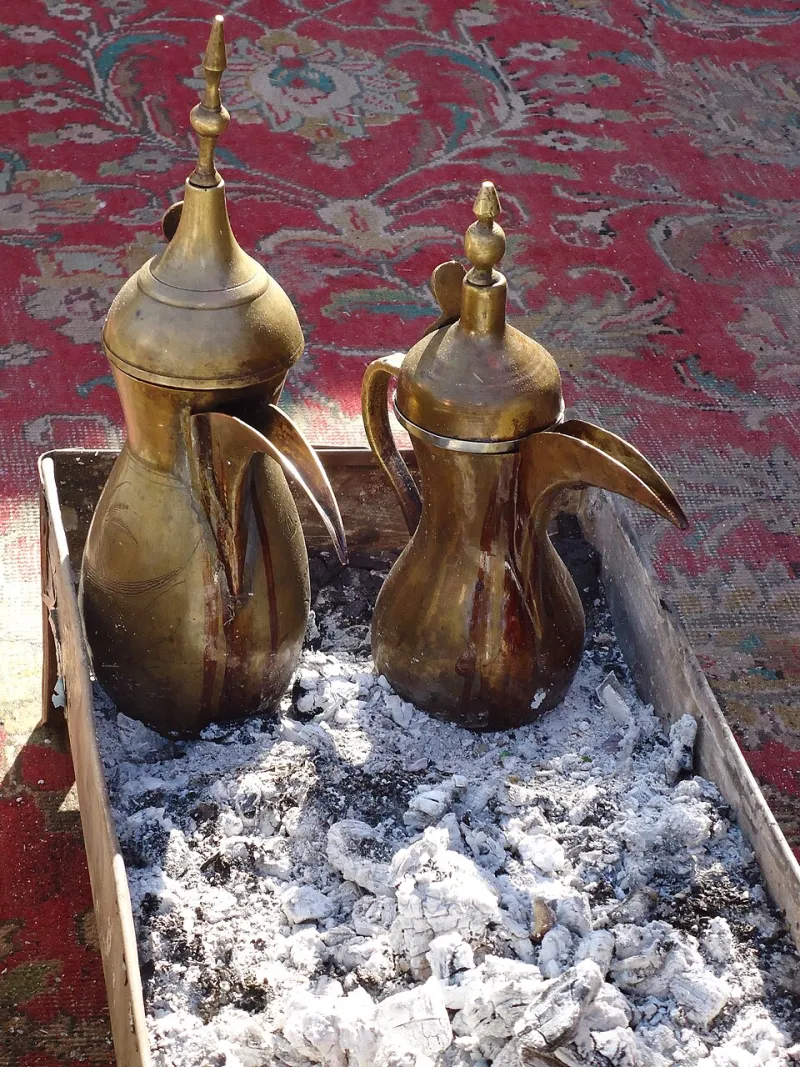
Photo: Elph, Public domain, via Wikimedia Commons
Walk into any trendy specialty coffee shop in Portland or Austin these days, and you'll hear a lot of talk about "intentionality." Intentional sourcing, intentional brewing, intentional hospitality. It's a beautiful concept — but it's also about five hundred years late to the party.
The qahwaji — the traditional coffee server of the Arab world — was practicing intentionality long before it had a hashtag. These weren't just people who poured hot drinks. They were trained observers, social navigators, and guardians of a preparation ritual so precise that getting it wrong wasn't just embarrassing, it was a cultural offense. What they knew, and what they passed down through generations, is something the specialty coffee world is only now beginning to piece together.
Who Exactly Was the Qahwaji?
The title itself comes from "qahwa," the Arabic word for coffee (and before that, for wine — but that's a whole other story). A qahwaji wasn't just a server in the way we'd think of a restaurant staffer today. In the coffeehouses of Cairo, Damascus, and Istanbul during the 15th and 16th centuries, the qahwaji occupied a specific social role — part host, part therapist, part community anchor.
These early coffeehouses, called qahwakhanas or maqhas, weren't just places to grab a drink. They were where merchants sealed deals, poets tested new work, and political ideas got their first airing. The qahwaji stood at the center of all of it, and their job required a skill set that went way beyond knowing how to operate a dallah.
Young qahwajis typically apprenticed for years under experienced masters. They learned to read body language, to remember the preferences of regulars without being asked, and to understand how the time of day, the season, and even the weather should influence how a cup was prepared and presented. This was craft in the truest sense of the word.
The Technical Stuff: What They Actually Knew About Coffee
Here's where it gets interesting for coffee nerds. The qahwaji tradition developed an incredibly sophisticated understanding of extraction long before anyone had the vocabulary to describe it scientifically.
Traditional qahwa — the lightly roasted, cardamom-spiced coffee of the Arabian Peninsula — requires a very specific approach to temperature. The beans are roasted to a pale golden color, a process that preserves delicate floral and grassy notes that a dark roast would completely destroy. The qahwaji understood that this style of coffee needed water that was hot but not aggressively boiling, and that brewing time had to be calibrated carefully to avoid bitterness.
Compare that to what third-wave coffee culture rediscovered in the early 2000s: the importance of roast profiles that preserve origin character, the significance of brew temperature (most specialty baristas now target around 200°F, well below boiling), and the idea that coffee shouldn't taste bitter if it's prepared correctly. The qahwaji had been working with these principles for centuries. They just called it tradition rather than science.
The grinding ritual deserves its own mention. The rhythmic pounding of coffee beans in a wooden mortar — a practice still performed ceremonially in parts of the Gulf — wasn't just for show. The wooden mortar produces a particular grind consistency that metal grinders replicate imperfectly. The sound of the pounding also served a social function, signaling to guests that fresh coffee was being prepared specifically for them. It was hospitality made audible.
Reading the Room: The Soft Skills No Coffee App Can Teach
Technique aside, what really set the qahwaji apart was their social intelligence. This is the part that modern coffee culture is slowest to acknowledge, probably because it's the hardest to systematize.
A skilled qahwaji could assess a guest's mood from the moment they walked through the door. Tired after a long journey? The coffee might be served slightly stronger, with an extra pause before the refill to allow for rest. Celebrating good news? The pour might be more generous, the interaction warmer and more conversational. Grieving? The qahwaji would serve quietly, without unnecessary talk, respecting the weight of the moment.
Refill etiquette was particularly nuanced. In Gulf tradition, a guest signals they've had enough by gently shaking the small handle-less cup (finjan) from side to side. But a thoughtful qahwaji learned to read subtler cues — the angle of a cup being set down, a slight shift in posture — to anticipate a guest's needs before they had to communicate them explicitly. That's a level of attentiveness that most hospitality training programs in the US don't even attempt.
Some contemporary specialty coffee shops are starting to move in this direction. You'll find cafés in cities like New York and San Francisco that train their staff in "hospitality-forward" service, emphasizing emotional attunement over transactional speed. It's a meaningful shift. But it's worth knowing that the qahwaji tradition got there first, and did it without a customer experience consultant in sight.
Why This Matters for American Coffee Culture Right Now
The US specialty coffee scene has done extraordinary things over the past two decades. The quality of beans available to American consumers, even at the grocery store level, is dramatically better than it was in 2000. Brewing methods that were once considered obscure — pour-over, Chemex, siphon — are now mainstream. That's genuinely worth celebrating.
But there's a tendency in American coffee culture to treat the history of coffee as beginning in Europe, maybe with a nod to the Ethiopian origin story. The rich, centuries-deep tradition of the Arab world — the civilization that took coffee from an Ethiopian highland plant to a global phenomenon — often gets compressed into a footnote.
The qahwaji tradition challenges that narrative. It says: before there were barista championships and specialty roaster collectives, there was a fully developed philosophy of coffee preparation and service that prioritized quality, intentionality, and human connection. It was the original specialty coffee movement, and it happened in the coffeehouses of the Middle East.
Bringing It Forward
None of this is an argument that modern coffee culture should simply copy the past. The qahwaji tradition evolved in specific social and geographic contexts that don't map perfectly onto a Brooklyn café or a home kitchen in Chicago. But the underlying principles — respect for the ingredient, attentiveness to the guest, patience with the process — translate beautifully across centuries and cultures.
Next time you're waiting for your pour-over to finish its bloom, or you're carefully measuring out cardamom for a pot of qahwa, consider that you're participating in something much older than the current coffee moment. The qahwaji figured most of this out a very long time ago. We're just catching up.