The Graceful No: How to Decline a Second Qahwa Without Cooling the Room
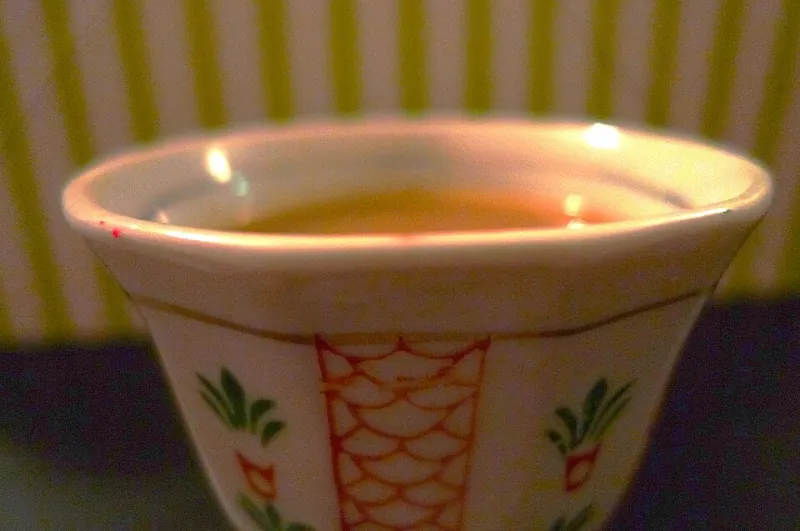
Photo: أدوّن وأوثق أيامي بالصور, CC BY 2.0, via Wikimedia Commons
You are at a friend's family dinner, or a neighbor's Eid gathering, or a small majlis in an apartment that smells like cardamom and toasted coffee. Your finjan is empty. The host lifts the dallah. Everyone at the table is watching, politely. You like qahwa, but you have had enough. What do you do?
This is one of the most common questions Americans ask about Arab coffee hospitality, and it is a good one. The answer is not a single magic word. It is a small combination of timing, tone, and gesture. Get those right, and you can say no without making the room feel like you just rejected a gift.
First, Know What the Second Cup Means
In many Arab coffee traditions, the second cup is not just a refill. It is a continuation of welcome. The host pours because pouring is how hospitality becomes visible. You accept because accepting is how trust becomes visible. That is why a blunt refusal can land strangely: it can sound like you are closing a door that the host was holding open.
But the ritual also makes room for a graceful no. In fact, the no is part of the rhythm. The host offers; the guest signals sufficiency; the host may offer again; the guest answers with warmth. The goal is not to win a debate about caffeine. The goal is to leave everyone feeling respected.
The Phrases That Do the Work
Start with a thank-you. It softens the no before the no arrives.
Shukran, khalas. Thank you, that is enough. This is direct but friendly. The word khalas is widely understood, though pronunciation and usage vary by region.
Shukran, hadha kafi. Thank you, this is sufficient. A slightly more formal version that works well in mixed company.
Bas, shukran. Enough, thank you. This is colloquial and common in many dialects. Use it only if you have already established a warm, informal tone.
Allah yatik al-afiya. May God give you health. This is not exactly a refusal. It is a compliment you can say as you finish, and it often pairs naturally with a hand over the cup.
If you have heard the word sadad in a Gulf hosting context, you may also hear it used as a polite signal of sufficiency. It is not universal, and families differ. When in doubt, stick with shukran plus a gesture and a smile.
The Gestures That Back Them Up
Words do most of the work, but gestures keep the message gentle.
Finish the cup first. Do not refuse mid-sip. Drink what you have, then respond when the host reaches for the dallah.
Gently shake the empty finjan. A small side-to-side motion is a common way to signal that you are finished. Keep it light. This is not a cocktail shaker.
Place your hand over the cup. A flat hand, palm down, is a clear and polite stop. Pair it with eye contact and a small smile.
Do not push the cup forward. Pushing it toward the host can read as a demand for more, which is the opposite of what you mean.
Keep the cup in your hand. Setting it down and looking away can feel abrupt. Holding it while you say shukran keeps the exchange warm.
Timing Matters More Than Vocabulary
A graceful no is usually offered after you have finished the current cup and after a natural pause in conversation. If you interrupt the host mid-pour, it can feel like a correction. If you wait until the host has already filled your cup, you may feel obligated to drink it.
The sweet spot is simple: finish, make eye contact, say shukran, and place your hand over the cup as the host lifts the dallah. If the host pours anyway, you have not failed. You have entered the next part of the ritual.
When the Host Insists
In many homes, the first no is met with a second offer. This is not always a test. It is often just hospitality doing its job. The host wants to be sure you are truly satisfied and not being polite at your own expense.
If the host insists, you have a few graceful options. You can accept a very small pour. You can say nuss finjan — half a cup — with a smile. You can accept the cup and simply hold it while you continue talking. Or you can repeat shukran, khalas with a hand over your heart, which signals warmth rather than rejection.
What you do not need to do is over-explain your caffeine sensitivity, your sleep schedule, or your doctor's advice. A simple, warm no is usually enough. The host is not asking for a medical report. The host is asking whether you feel cared for.
If You Are the Host
If you are the one holding the dallah, learn to receive the no with the same grace you offer the cup. A guest who says khalas is not rejecting you. They are telling you that the hospitality has landed. The correct response is usually a smile, a small nod, and a move to the next part of the gathering: dates, conversation, tea, or the door.
The Point of the Graceful No
Refusing a second cup is not a failure of manners. It is part of the conversation that qahwa makes possible. The host offers; the guest answers; both people get to be generous. The finjan is small, but the exchange is not. Say no with a thank-you, a hand, and a little warmth, and the room will stay exactly as it should: open.


