Spend Less, Taste More: How Qahwa Quietly Embarrasses the Specialty Coffee Price Tag
Walk into any specialty coffee shop in the US right now and you'll find a $22 bag of single-origin beans sitting on the shelf like a trophy. The tasting notes are poetic. The backstory is immaculate. The barista will tell you about the elevation, the varietal, the processing method. And honestly? A lot of it is genuinely good coffee.
But here's the thing nobody in that shop is going to tell you: somewhere across town, someone is brewing a cup that's just as complex, just as aromatic, and just as satisfying — using beans that cost a fraction of the price. They've been doing it this way for five hundred years. It's called qahwa, and it doesn't care about your price-to-quality assumptions.
The Western Specialty Coffee Equation (And Why It Doesn't Hold Universally)
The modern specialty coffee industry is built on a pretty logical premise: better sourcing, better processing, better roasting, and better brewing all cost more money. Pay more, get more. That framework has driven an entire economic ecosystem, and it's produced some genuinely remarkable coffee along the way.
But the equation only works if you accept its starting assumptions — that light roasting preserves complexity, that single-origin beans are inherently superior, and that minimal intervention is always better. Qahwa rejects all three of those ideas, and then it has the audacity to taste incredible anyway.
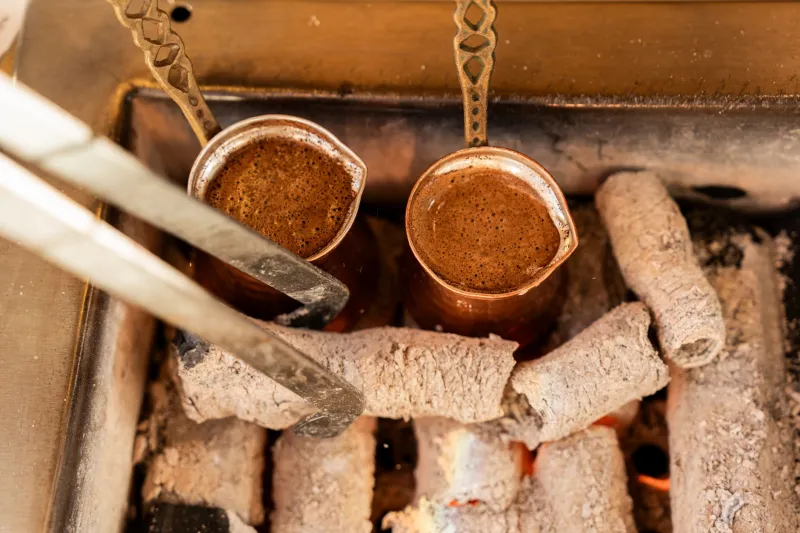
Traditional qahwa is made from lightly roasted or even green (unroasted) coffee beans, simmered slowly with whole spices — cardamom being the backbone, with saffron, cloves, and sometimes rose water joining the mix depending on the regional style. The beans used are often inexpensive, widely available, and not particularly special by Western specialty standards. And yet the resulting beverage is layered, nuanced, and deeply satisfying in a way that $22-a-bag beans brewed in a V60 sometimes just... aren't.
What Minimal Processing Actually Does for Flavor
Here's where it gets interesting from a purely flavor-science perspective. Specialty coffee's obsession with processing — washed, natural, honey, anaerobic — is largely about coaxing specific flavor profiles out of the bean before it ever hits a roaster. Those methods are expensive and labor-intensive, and the cost gets passed directly to the consumer.
Qahwa takes a different route. Instead of manipulating the bean, it manipulates the brew. Long, slow simmering extracts compounds from the coffee that faster methods leave behind. The spices don't just add flavor on top — they interact with the coffee's natural oils and acids during the cooking process, creating a chemical conversation that produces complexity you genuinely cannot get from a single-origin pour-over. You're not paying for the bean's origin story. You're paying attention to the process instead.
Green or very lightly roasted beans, which are significantly cheaper than the carefully developed roasts in your local shop, actually hold up beautifully to this kind of extended heat exposure. The slow simmer becomes the roast, in a sense. You're doing the flavor development yourself, in real time, in your kitchen.
The Spice Math Nobody Talks About
Let's get practical for a second. A quality bag of green cardamom pods — the kind that makes your qahwa actually taste like something — runs somewhere between $8 and $14 for a few ounces at a Middle Eastern grocery store or online. That sounds like a lot until you realize those pods, used whole and ground fresh, will last you weeks of daily brewing. Whole spices retain their volatile aromatics far longer than pre-ground versions, and they're almost always cheaper per unit of flavor delivered.
Saffron is the one exception — it's genuinely expensive, and always will be. But here's the thing: traditional qahwa uses saffron in tiny, almost homeopathic quantities. A few threads per pot, not a pinch. The amount you'd use in a week of regular qahwa brewing might cost you less than a dollar. The flavor return on that investment is absurd.
Add in a handful of whole cloves, maybe some dried rose water from a bottle that costs four dollars and lasts six months, and you've built a spice cabinet that produces extraordinary coffee for pennies per cup. No subscription required.
Communal Brewing as an Economic Superpower
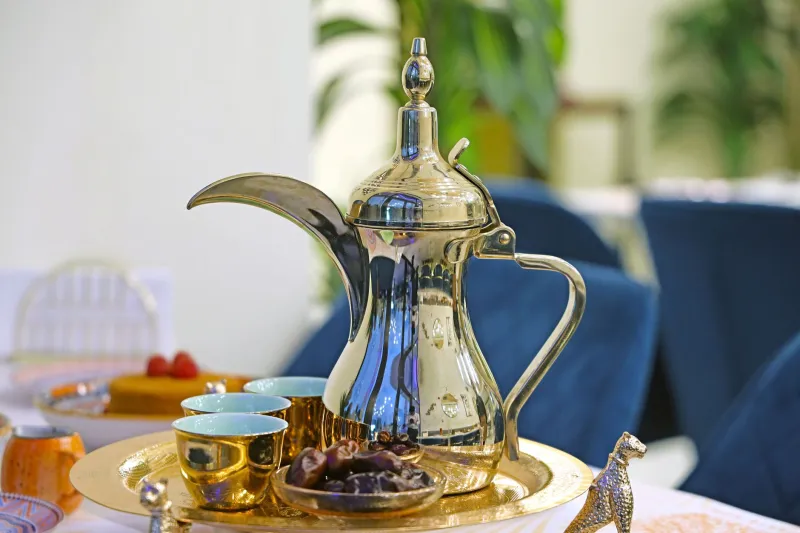
One of the things Western coffee culture has moved away from — and qahwa culture has always maintained — is the idea of brewing for a group rather than for one. The dallah, the traditional Arabic coffee pot, isn't designed for a single serving. It's designed for a gathering. You make a pot and you share it.
This communal model changes the economics completely. When you brew qahwa for six people using a handful of beans and a few spices, the per-cup cost drops to something almost embarrassing. Compare that to six individual specialty coffee drinks, whether that's six pour-overs at home or six $6 lattes at a café, and the math becomes almost comical.
But the value isn't just financial. The act of brewing for others — of making something with care and sharing it in a social context — adds a dimension of satisfaction that no amount of money spent on premium beans can manufacture. Qahwa has always understood that the experience of the cup is inseparable from the experience of who you're drinking it with.
So Why Aren't Americans Talking About This?
Part of it is visibility. Qahwa hasn't had a major marketing push in the US. It doesn't have a celebrity founder or a clever rebrand or a presence at coffee expos. It exists in Middle Eastern grocery stores, in family kitchens, in the homes of people who learned to make it from their parents and grandparents. It's never needed a hype cycle because it's never needed to sell itself.
Part of it is also that the specialty coffee industry has done an exceptional job of associating price with legitimacy. When something costs less, we're conditioned to assume it's lesser. Qahwa doesn't play by those rules, and it never has.
If you've been spending $20 a week on specialty coffee and wondering whether there's a better way to get complexity and ritual out of your morning cup, the answer has been sitting in the Middle East for five centuries. It just never got a proper introduction.
Getting Started Without Breaking the Bank
You don't need much to start brewing qahwa at home. A small saucepan works fine if you don't have a dallah yet. Green or very lightly roasted Arabic coffee beans are available at most Middle Eastern grocery stores and online for a few dollars a pound. A bag of green cardamom pods. That's your foundation.
Brew slow. Use less coffee than you think you need. Let the spices do the heavy lifting. Pour into small cups and drink it while it's warm.
You'll spend maybe $15 on your first full setup. You'll make dozens of cups from it. And you'll probably wonder why nobody told you about this sooner.