How a Single Spice Got Blacklisted From Your Coffee Cup — And Why It's Coming Back
Walk into any third-wave coffee shop in Brooklyn, Portland, or Austin right now and you'll find menus obsessing over single-origin beans, elevation levels, and processing methods. What you almost certainly won't find is cardamom — the small, green, intensely aromatic pod that has been inseparable from coffee culture across the Arabian Peninsula, the Levant, and East Africa for over five hundred years.
That absence isn't accidental. It was, in many ways, engineered.
The Spice That Was Rebranded as 'Weird'
Cardamom is the third most expensive spice in the world, behind saffron and vanilla. It's native to South Asia, traded through ancient routes that passed directly through the same Yemeni ports that gave the world its first commercial coffee. The two — cardamom and coffee — grew up together as commodities. They were traveling companions long before they became brewing partners.
So how did cardamom end up on the outside of American coffee culture looking in?
The short answer is marketing. The slightly longer answer involves decades of American food industry decisions that consistently framed Middle Eastern and South Asian flavors as niche, adventurous, or — the killer word — exotic. Once something gets labeled exotic in consumer culture, it stops being an ingredient and starts being a novelty. And novelties don't make it into the everyday cup.
Cardamom got that label hard. By the time specialty coffee started its serious American rise in the 1990s and 2000s, the conversation was dominated by a very specific aesthetic: clean, pure, minimal. The idea was that great coffee didn't need anything added to it. Spices, in that worldview, were a distraction — something you added to hide inferior beans, not to build on good ones.
It's a framing that made some sense in context. But it also conveniently left an entire hemisphere's worth of coffee tradition on the cutting room floor.
What Qahwa Always Knew
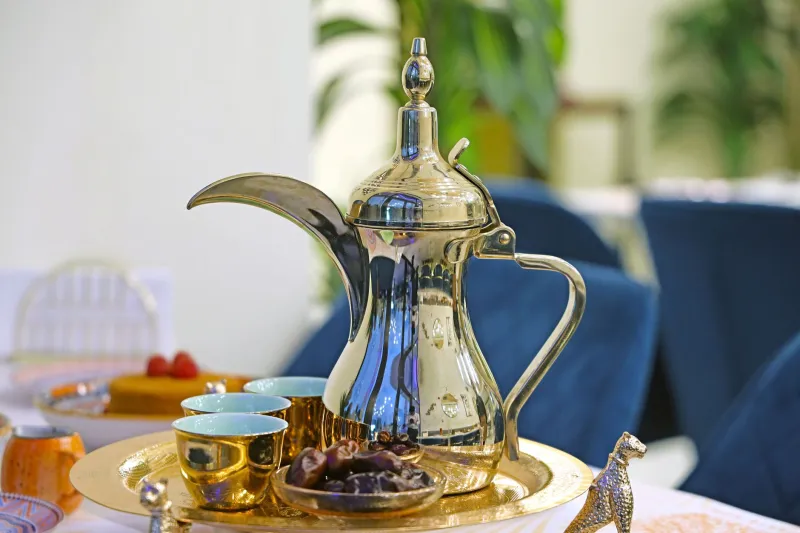
Here's the thing about cardamom in qahwa: it was never added to mask anything. Traditional qahwa — the lightly roasted, slow-brewed coffee served across Saudi Arabia, the UAE, Kuwait, and beyond — uses cardamom as a partner to the coffee, not a cover for it. The spice opens up the cup. It adds a layer of warmth and brightness that the coffee alone can't produce, and it rounds out the bitterness in a way that doesn't require sugar or milk to do the heavy lifting.
Qahwa masters didn't stumble onto this combination by accident. They refined it over generations, adjusting ratios, experimenting with whole pods versus crushed seeds, figuring out exactly when in the brewing process to add the spice to get the most out of it. That's not folk medicine guesswork — that's culinary precision built over centuries.
There's also the digestive angle, which Western coffee culture has almost entirely ignored. Cardamom has a long history in Ayurvedic and traditional Arabic medicine as a digestive aid. The volatile oils in the spice — primarily cineole and terpinene — have been shown in modern research to support gastric motility and reduce bloating. Coffee, for all its virtues, can be rough on sensitive stomachs. Cardamom, brewed alongside it the qahwa way, has historically been understood as a counterbalance to that roughness. The combination wasn't just delicious. It was considered functional.
Western coffee culture, obsessed with optimizing beans and brewing temperatures, somehow missed the optimization that was sitting right there in a little green pod.
The Marketing Machine That Kept It Out
It helps to understand the scale of the forces that shaped American coffee identity. The major coffee companies — the ones that built the habits of multiple generations of American consumers — were selling convenience and consistency, not complexity. Cardamom doesn't fit neatly into that model. It's perishable, variable in quality depending on origin and freshness, and it requires a bit of knowledge to use well.
More importantly, it required American consumers to think of coffee as a spiced beverage rather than a pure one. That was a harder sell when the whole industry was moving toward the idea that a truly great cup needed nothing but water and a perfectly roasted bean.
So cardamom got quietly sidelined. It showed up occasionally in chai lattes, mostly as a supporting character. It appeared in holiday baking. It never got to be what it actually is in qahwa tradition: essential.
The specialty coffee movement that came later — the one genuinely committed to quality and craft — could have rehabilitated cardamom. Instead, it doubled down on minimalism. Single-origin purity became the new orthodoxy, and anything that complicated that purity got left behind.
The Quiet Comeback
Something is shifting, though. It's not loud, and it's not being driven by the big coffee brands. It's happening at the edges — in Arab-American households, in Middle Eastern grocery stores, in the growing number of Americans who have tasted qahwa at a friend's place or at a restaurant and found themselves genuinely surprised by what coffee can taste like when cardamom is in the picture.
Social media has accelerated this. Recipe videos showing traditional qahwa preparation have found real audiences among American coffee enthusiasts who are curious about what they've been missing. Food writers who spent years covering the third-wave scene are starting to pay attention to traditions that predate third-wave by several centuries.
The spice aisles at grocery stores like Whole Foods and international markets are telling the same story — cardamom sales in the US have grown steadily over the past decade, and a meaningful chunk of that growth is being driven by people who want to experiment with it in coffee specifically.
And once you try it, it's genuinely hard to understand why it was ever kept out.
What You're Actually Missing
If you've never brewed with cardamom, the experience is a bit disorienting at first — in a good way. The spice doesn't overpower the coffee. What it does is add dimension. There's a floral quality, a slight citrus edge, a warmth that sits underneath the coffee's natural bitterness and makes the whole thing feel more complete. It's the difference between a melody and a chord.
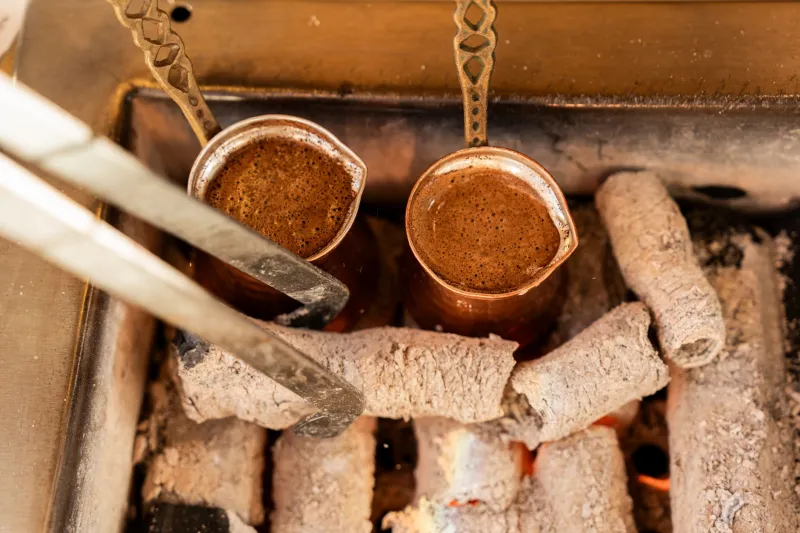
Start simple. Crush two or three green cardamom pods and add them to your grounds before brewing. Or do it the traditional qahwa way: simmer lightly roasted coffee with cardamom in water, let it steep, and pour it through a strainer into a small cup. No milk. No sugar. Just the coffee and the spice doing what they've been doing together for five hundred years.
The conspiracy, if you want to call it that, was never really sinister. It was just the usual story of a market deciding what counts as normal and what counts as other. Cardamom got sorted into the wrong column.
But that column is getting blurrier every year. And qahwa — patient, ancient, and still delicious — has been waiting this whole time.