What You Drink From Changes Everything: The Hidden Language of Qahwa Vessels

Photo: Canbel, CC BY-SA 4.0, via Wikimedia Commons
Pick up a standard American coffee mug and you're probably not thinking much about what it communicates. Maybe it has a logo on it. Maybe it's just the one that was clean. But in the world of qahwa — the spiced, aromatic coffee tradition that's been woven into Middle Eastern hospitality for centuries — the vessel you serve from and drink out of is doing a lot of quiet, deliberate work.
It's one of those details that gets lost when coffee culture gets exported, simplified, or filtered through a Western lens. And honestly? It's one of the most fascinating parts of the whole tradition.
Meet the Finjal: Small Cup, Big Presence
The finjal (sometimes spelled finjan or finjaan depending on where you are in the Arab world) is the classic qahwa cup, and the first thing most people notice is what it's missing: a handle. These small, handleless porcelain or ceramic cups typically hold just an ounce or two of liquid — not much more than an espresso shot. But the point was never to gulp down a large volume of coffee. The point was to slow down.
Cradling a warm finjal in both hands, or balancing it gently between your fingers, naturally changes your posture and your pace. You can't rush it. You have to be present with it. That's not an accident — it's baked into the design.
The size also has a practical purpose rooted in the way qahwa is typically prepared. Traditional qahwa is light in color, made from lightly roasted green or yellow coffee beans, and heavily spiced with cardamom, saffron, and sometimes rosewater. It's not a drink you chase with cream and sugar. A small pour lets you appreciate the aromatic complexity without overwhelming your palate — or your caffeine tolerance.
Regional Variations Tell Their Own Stories
Here's where things get really interesting. The finjal isn't a monolith. Across the Middle East, the style, material, and even the color of qahwa cups shifts noticeably from region to region, and those differences reflect real cultural distinctions.
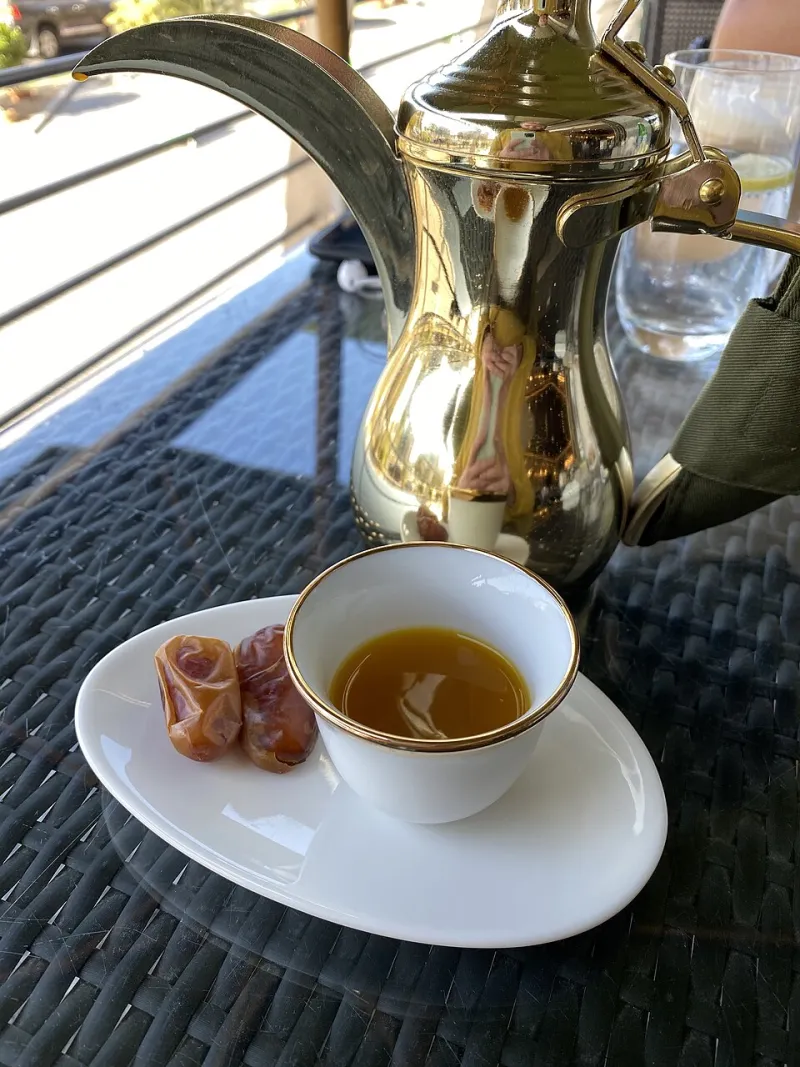
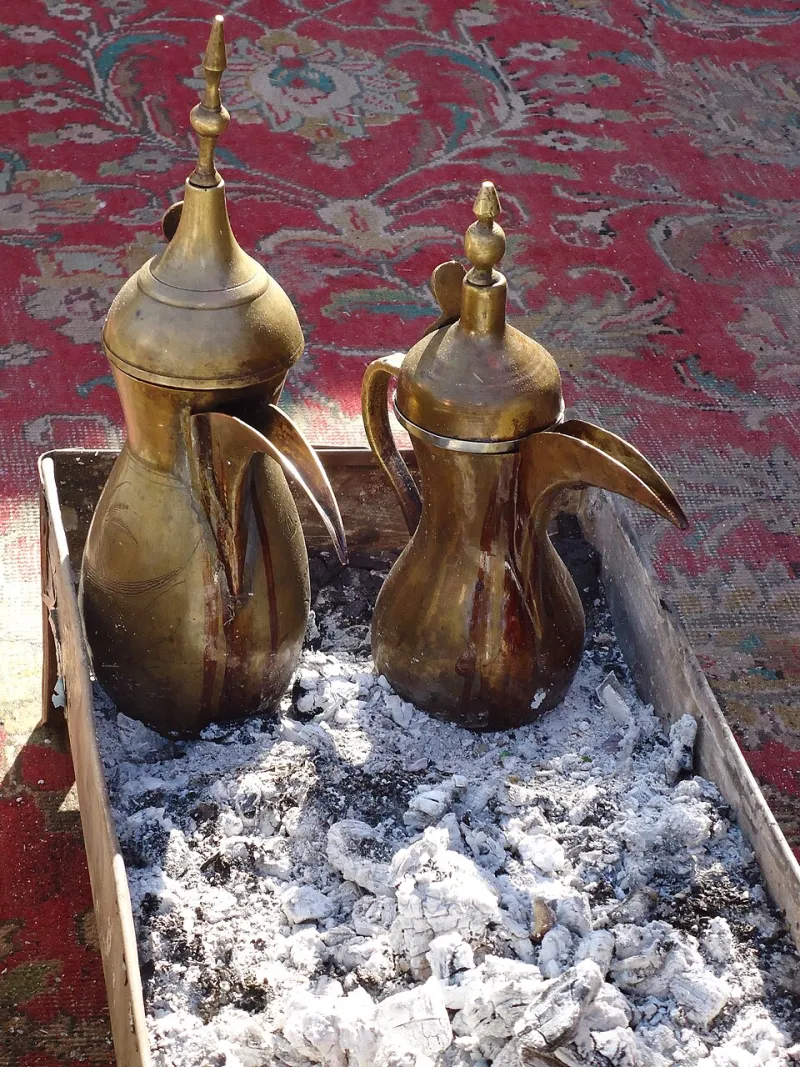
In Gulf countries like Saudi Arabia, the UAE, and Kuwait, you'll often encounter plain white or cream-colored finjals — sometimes rimmed in gold — that feel deliberately understated. The simplicity puts focus on the hospitality itself rather than the object. The dallah (the long-spouted coffee pot used to pour) gets most of the visual attention in these settings.
In Yemen, cups tend to be earthier, often featuring hand-painted geometric patterns that echo the country's rich textile and architectural traditions. Yemeni qahwa — which sometimes incorporates husks from the coffee cherry rather than the bean itself — has its own character, and the vessels reflect that distinctiveness.
Levantine traditions, spanning Lebanon, Syria, Jordan, and Palestine, often feature more decorative cups with floral motifs or intricate borders. The coffee itself skews darker and spicier in some households, and the cups feel like they're dressed for the occasion.
Even within a single country, family heirlooms play a huge role. Many households have sets of finjals passed down through generations — chipped, mismatched, and absolutely irreplaceable.
What Your Cup Choice Communicates
In a traditional qahwa setting, the host's choice of vessel sends signals that guests read fluently, even if they'd never articulate it out loud. Bringing out the good finjals — the ones saved for special occasions — is a form of honor. Serving in everyday cups isn't an insult, but it reads differently. The whole ritual is a layered social language.
There's also an etiquette around refills that's tied to the cup itself. In many Gulf traditions, a guest signals they've had enough by gently tipping or wiggling the finjal when it's returned to the host. No words needed. The cup does the talking.
For American enthusiasts getting into qahwa at home, understanding this context transforms the experience. You don't have to perform a ceremony you weren't raised in — but knowing why these objects were designed the way they were makes using them feel intentional rather than decorative.
Finding Authentic Vessels in the US
The good news: sourcing genuine finjals in America is easier than it used to be. Here's where to look.
Middle Eastern grocery stores and import shops are your best starting point. Cities with significant Arab American communities — Dearborn, Michigan; Brooklyn, New York; Houston, Texas; Los Angeles — often have specialty shops that stock authentic cups alongside their food imports. Don't overlook the back shelves.
Online marketplaces like Etsy have a growing number of vendors selling handmade and vintage finjals from artisans in Jordan, Palestine, and Turkey. Search specifically for "finjal set" or "Arabic coffee cups" rather than generic "espresso cups" — the results are very different. Ounce for ounce, you're often getting something with real craft behind it.
Specialty importers focused on Middle Eastern goods — sites like Souq.com's international shipping partners or dedicated cultural importers — can connect you with higher-end sets, including those featuring hand-painted designs or traditional silverwork.
A few things to look for: cup capacity around 2–3 oz, a rim that's slightly wider than the base for comfortable lip contact, and materials that hold heat well without burning your fingers (thicker walls help). Avoid anything marketed purely as "espresso cups" — the proportions and design language are different.
Using Them Right at Home
You don't need a full ceremonial setup to honor the tradition. Even brewing a simple cardamom-spiced qahwa and pouring it into a proper finjal changes the experience in a way that's hard to explain until you've tried it. There's something about the scale and the warmth and the way you have to hold the cup that quietly reorients your relationship to the drink.
If you're hosting friends and want to introduce them to qahwa culture, the cups become natural conversation starters. People pick them up, turn them over, ask questions. Suddenly you're talking about Yemen or the Gulf or your grandmother's kitchen — and that's exactly what these objects were always meant to do.
The cup doesn't just hold the coffee. It holds the story behind it. That's not poetic license — it's just how this tradition was built.