Sitting Still With Strangers: What Qahwa Gatherings Teach Us About Connection
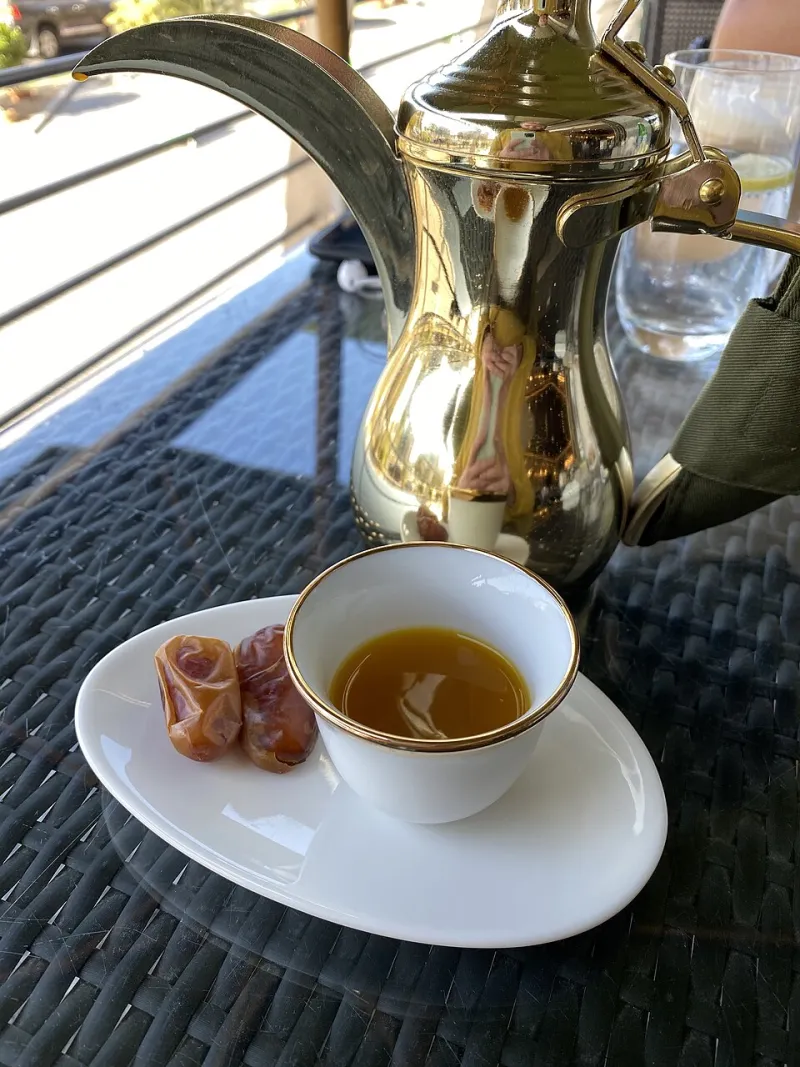
Photo: Slywire, CC BY-SA 4.0, via Wikimedia Commons
Let's be honest about how most Americans drink coffee. Standing over a sink. In the car. At a desk with seventeen browser tabs open. Maybe in line at a drive-through, engine running, already mentally somewhere else. Coffee has become less a ritual and more a delivery mechanism — caffeine, fast, no friction.
Which is exactly why the traditional qahwa gathering feels so disorienting the first time you encounter it. Not in a bad way. In the way that stepping into a quiet room after a loud party feels disorienting — like your nervous system suddenly remembers what it was built for.
What a Qahwa Gathering Actually Looks Like
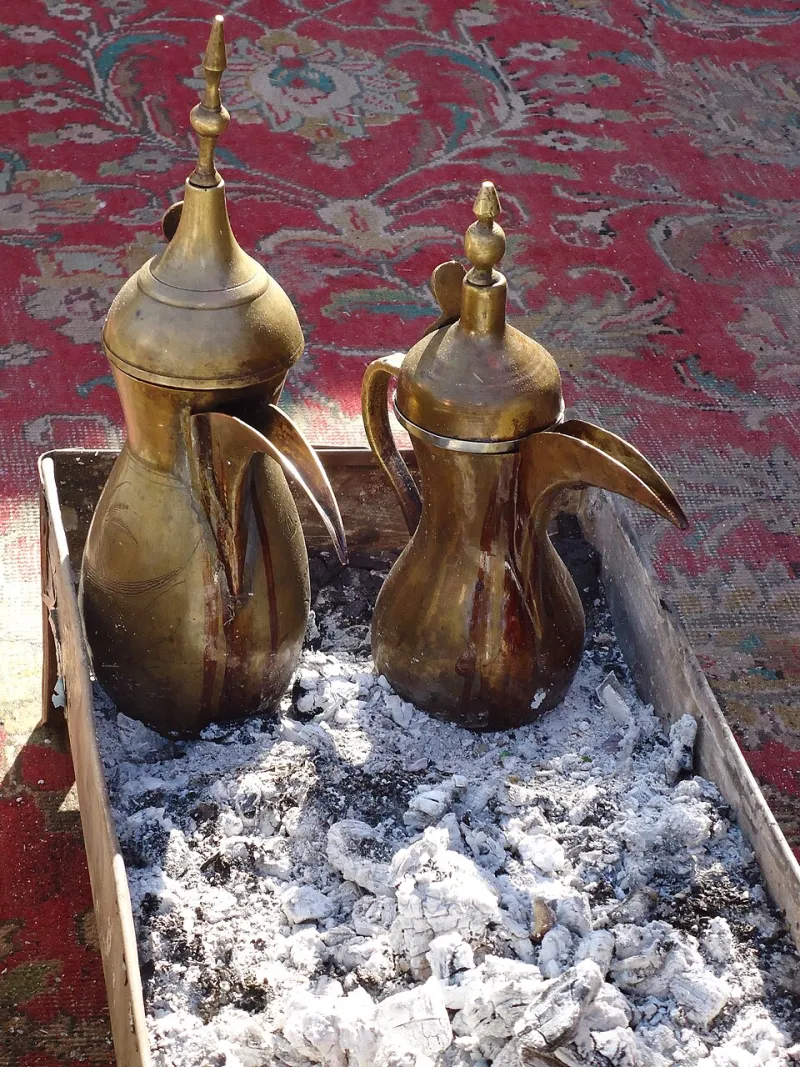
The setup varies by region and occasion, but the bones are consistent. People gather — often seated on cushions or low chairs arranged in a circle or along the walls of a majlis (a dedicated reception space). A host, or sometimes a designated qahwaji (the person responsible for preparing and serving coffee), brews qahwa in a traditional dallah, the long-spouted copper or brass pot that's become one of the most recognizable symbols of Gulf hospitality.
The coffee is poured into small, handleless finjans and served from right to left, starting with the most honored guest. You don't pour your own. You don't grab a cup and wander off. You receive it, you hold it, you drink it slowly. When you want more, you hold out your cup. When you've had enough, you give the cup a small side-to-side shake — a gesture that means "I'm finished, thank you" — and the server moves on.
There are dates, often, and sometimes other small sweets. There is conversation, though not the frantic, agenda-driven kind. There is, crucially, no particular urgency to leave.
Sounds simple. Feels profound.
The Psychology of Shared Ritual
Social scientists have spent decades studying what makes communities cohesive, and one finding keeps surfacing: shared rituals — even small, seemingly mundane ones — are disproportionately powerful at building trust and a sense of belonging.
A 2014 study published in Psychological Science found that synchronized behavior, including something as simple as drinking in unison, increases cooperation and feelings of connection between participants. The researchers called it "behavioral synchrony," and it turns out the human brain responds to it in ways that feel almost chemically significant — because they are. Shared ritual activates the same neural pathways associated with social bonding.
The qahwa ceremony, though it predates modern psychology by several centuries, is essentially a masterclass in behavioral synchrony. Everyone receives the same cup. Everyone drinks the same brew. The pacing is collective, not individual. You're not on your own timeline; you're on the group's timeline. And that small surrender of individual scheduling — that agreement to be present together — does something measurable to how connected you feel to the people around you.
"There's this moment when the dallah comes out," says Nadia, a Jordanian-American woman living in Chicago who hosts monthly qahwa gatherings in her home, "where I watch people put down their phones. Not because anyone asked them to. Just because the moment has a gravity to it. The smell, the sound of the pour — it signals that something is happening that's worth paying attention to."
Mindfulness Before It Had a Hashtag
The wellness industry has spent the last decade selling Americans on mindfulness — the practice of being fully present in a moment without distraction or judgment. Apps, courses, retreats, breathing exercises. It's a multi-billion dollar market built around a problem that, in many cultures, was never really a problem at all.
Traditional coffee ceremonies in the Middle East, East Africa (Ethiopia's jebena ceremony is a close cultural cousin), and elsewhere in the Global South have been practicing what we'd now call mindfulness for generations. The preparation of qahwa is unhurried by design. The roasting of beans, if done traditionally, is done by hand over an open flame, with the host stirring continuously and offering the rising smoke to guests so they can inhale the fragrance — an act of sensory presence that's hard to replicate with a pod machine.
The intentionality embedded in qahwa preparation isn't incidental. It's the point. You can't rush a dallah the same way you can't rush a conversation that matters.
Omar, a Syrian-American software engineer in Austin who grew up watching his grandmother prepare qahwa every afternoon, describes it this way: "She would never let anyone help her rush it. I didn't understand as a kid. Now I get it. The slowness was the gift she was giving us. She was saying: this time, right now, is worth taking seriously."
What American Coffee Culture Is Missing
The US has developed a remarkable coffee culture in many respects. Specialty coffee here is genuinely excellent — the sourcing, the roasting, the brewing technique. American baristas compete internationally and often win. We take the bean seriously.
But the gathering part? That's where things get thin.
Coffee shops function more like remote offices than social spaces for many Americans. We go alone, sit alone, work alone, leave alone. Even when we go with a friend, the experience is often transactional — we're catching up efficiently, not settling in for something unhurried.
The qahwa tradition suggests a different possibility: that the way you drink coffee can be as meaningful as the coffee itself. That the social architecture around a cup — who pours it, who receives it first, how long you sit with it — communicates something that the beverage alone cannot.
"I started hosting qahwa nights partly because I was lonely," admits Leila, a Lebanese-American in Los Angeles who began the gatherings during the pandemic and has kept them going since. "Not in a dramatic way. Just in that modern, low-grade way where you have plenty of acquaintances and not enough actual connection. The ceremony gave us all a reason to slow down and actually talk. Now these people are my closest friends."
How to Start Your Own Practice
You don't need a majlis or a dallah or even a Middle Eastern grocery store nearby to start experimenting with ceremonial coffee. The principles translate.
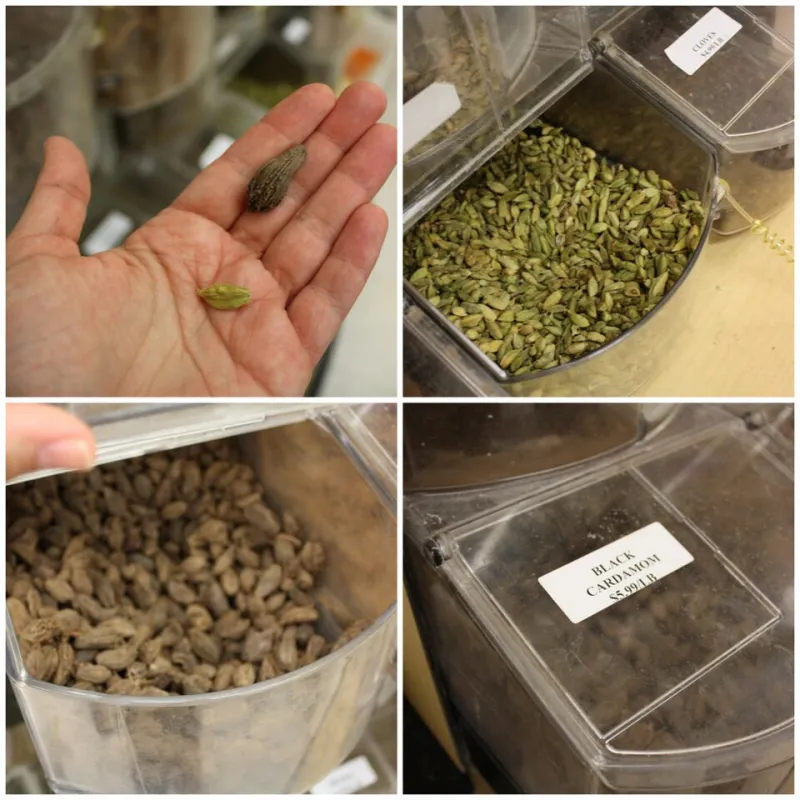
Start small: invite two or three people over specifically for coffee. Not coffee-and-Netflix. Not coffee-before-we-head-out. Just coffee. Brew it with some intention — cardamom optional but recommended. Sit in a circle if you can. Pour for each other. Put your phones face-down. Let the conversation find its own pace.
It will feel slightly awkward at first, because most of us have forgotten what it feels like to simply be in a room with other people without a screen mediating the experience. That awkwardness passes quickly. What replaces it tends to linger.
That's the thing about a five-hundred-year-old ritual: it's been refined by a lot of human trial and error. The people who designed the qahwa gathering knew something about what we need from each other. We'd do well to pay attention.