What Your Coffee Order Says About You: The Ancient Art of Reading Guests Through Qahwa
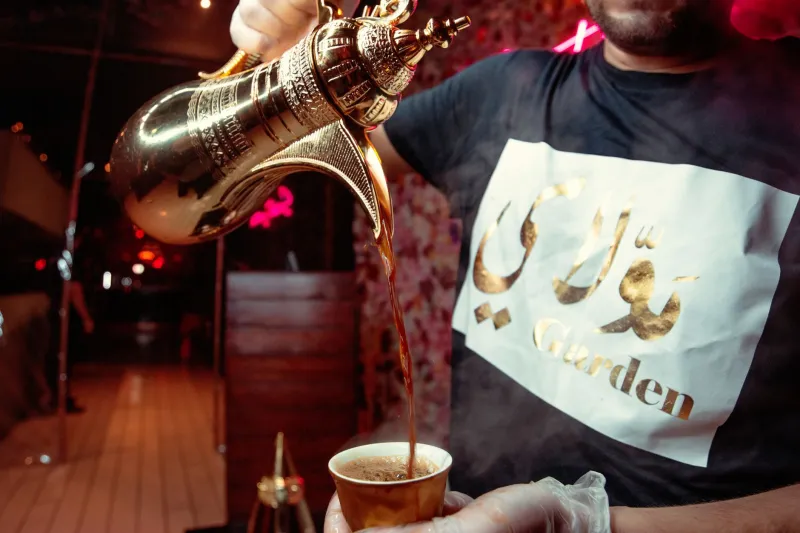
There's a particular kind of attention that a skilled qahwaji pays to the room. Not the distracted, phone-in-hand awareness most of us manage at dinner parties, but a slow, deliberate reading of the people in front of them. Before a single cup is poured, they're already gathering information — watching hands, listening to how someone greets the host, noticing who sits close to the entrance and who settles deep into the room.
This isn't intuition in the mystical sense. It's a craft. And for centuries across the Arabian Peninsula and the wider Middle East, it was passed down the same way any serious skill gets transmitted — through apprenticeship, repetition, and an almost obsessive attention to human behavior.
If you've ever felt like your coffee order reveals something about you, you're not wrong. You're just a few centuries late to the conversation.
The Qahwaji as Social Scientist
The word qahwaji literally refers to a person who prepares and serves coffee — but the role has always carried more weight than the job title suggests. In traditional Bedouin and Gulf hospitality settings, the qahwaji occupied a position of genuine social intelligence. They weren't just pouring drinks. They were managing the emotional temperature of a gathering.
A good qahwaji would know, for instance, that a guest who accepts their first cup with two hands and holds it close before drinking is likely showing deference — perhaps they're meeting the host for the first time, or they're aware of a status gap in the room. A guest who takes the cup with one hand and sets it down quickly might be restless, distracted, or simply not a coffee person (a situation the qahwaji would note and quietly work around).
The cup itself becomes a kind of conversation — one that happens entirely without words.
The Spice Ratio Tells You Who's Welcome
Here's something most Americans don't know: the spice blend in a pot of qahwa isn't fixed. It shifts depending on the occasion and, crucially, the guest.
A heavier hand with cardamom signals celebration and warmth — it's the blend you'd bring out for honored guests or family returning from a long trip. A lighter, more subtle brew might be prepared for a business meeting, where clarity of mind matters more than emotional openness. Saffron gets added when the host wants to communicate genuine esteem — it's expensive, it's beautiful, and its presence in a cup is a statement.
The qahwaji reads the room before deciding how to build the blend. Are these old friends or new acquaintances? Is there tension in the air, or are people relaxed? Is someone grieving, or is this a celebration? The spice ratio is a response to all of that.
For American hosts, this is a genuinely radical idea. We tend to treat our coffee setup as fixed — same beans, same roast, same creamer options on the counter. But what if the way you prepared a drink for someone was itself a form of listening?
The Accept-and-Wiggle: A Signal Worth Knowing
One of the most well-known gestures in Gulf coffee culture is the slight wiggle of the finjan — the small, handle-less cup used for qahwa. When a guest has had enough, they don't say "no thanks" or put their hand over the cup. They give it a gentle side-to-side tilt while handing it back to the qahwaji.
This small motion communicates a complete thought: I've received your hospitality, I'm satisfied, and I'm ready to move on. It's gracious without being effusive. It closes the loop without creating an awkward moment.
What's interesting is what happens when someone doesn't know this signal. The qahwaji will keep pouring — not out of forgetfulness, but because in the absence of a clear signal, the default assumption is that the guest wants more. The cup is never left empty unless the guest says otherwise.
There's a lesson buried in that dynamic. In traditional qahwa culture, the burden of communication falls on the guest, not the host. The host's job is to keep offering. The guest's job is to signal clearly when they're done. It's a system that forces both parties into active participation.
Reading the Decline
How someone declines a cup of qahwa is, if anything, more revealing than how they accept one.
A flat refusal — hand out, head shaking — can signal discomfort, unfamiliarity with the custom, or genuine dislike of the drink. A skilled qahwaji doesn't take this personally, but they do take note. This guest might need something else to feel at ease. What do they need to feel welcomed?
A polite decline after one cup, done with the wiggle gesture and a warm word, signals contentment. This person is comfortable, they've received what they came for, and the relationship is in good standing.
A guest who keeps accepting cup after cup without signaling is either deeply enjoying themselves, deeply polite, or — and this is the one a qahwaji watches for — deeply reluctant to end the conversation. Sometimes people stay in the cup because they're not ready to leave. That's information too.
Bringing This Into Your Own Entertaining
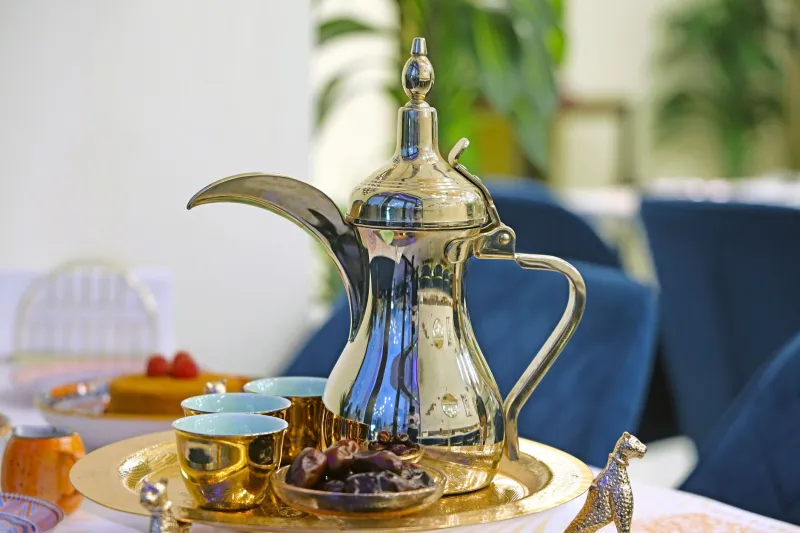
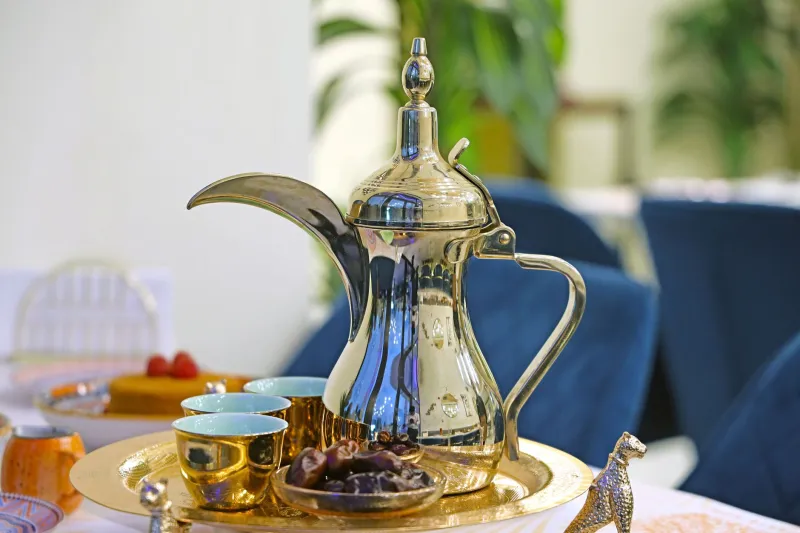
You don't need a dallah or a set of finjans to apply any of this. The underlying skill — reading people through small, observable behaviors around food and drink — is universally available.
Notice how your guests handle their first drink at a dinner party. Do they sip immediately or let it sit? Do they hold onto the glass or put it down? Are they tracking the room while they drink, or are they focused inward?
Pay attention to who declines a refill and who accepts without thinking. Watch how someone's body language shifts once they've had a drink they genuinely enjoy versus one they're tolerating out of politeness.
None of this is manipulation. It's attention. And attention, in the tradition of the qahwaji, is the most fundamental expression of hospitality there is.
The idea that you could know your guests better simply by watching how they drink coffee might sound old-fashioned. But in a culture where most hosting involves handing people a drink and then staring at your phone, there's something almost radical about paying that kind of quiet, sustained attention to the people in your room.
The Cup as Mirror
Every cup of qahwa poured in the traditional style carries an implicit question: Who are you, and what do you need right now?
The qahwaji's job was never just to serve coffee. It was to make each person feel seen — specifically, accurately seen — through the small, considered act of preparing something just for them.
That's a harder thing to do than it sounds. It requires slowing down, observing without judgment, and letting what you notice actually inform what you do next. It's the opposite of a hospitality script.
The next time you're hosting, try setting aside the checklist for a moment. Watch your guests. Notice what the cup tells you. You might be surprised how much a small, ancient gesture can reveal about the people you thought you already knew.