Three Cups, One Table: The Ancient Hosting Ritual That's Changing How Americans Entertain
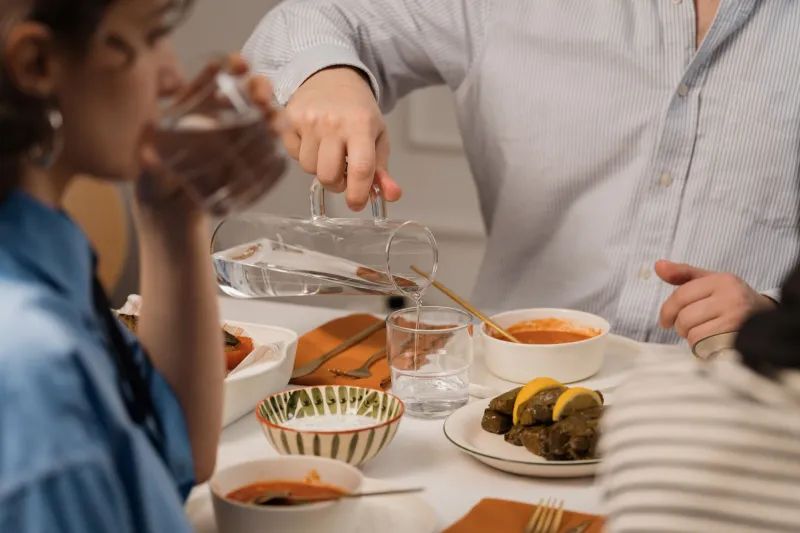
There's a moment at most American dinner parties — somewhere between the entrée and dessert — where the conversation either deepens or dissolves. People start checking phones. Someone mentions they have an early morning. The evening that felt full of potential starts quietly deflating.
A growing number of hosts across the US are borrowing an old fix for this very modern problem. It comes from the Arabian Peninsula, it involves a small handleless cup called a finjan, and it's been managing the social rhythms of gatherings for centuries. Welcome to the three-cup qahwa tradition — and why it might be the best entertaining upgrade you've never heard of.
What the Three-Cup Sequence Actually Is
In traditional Gulf and Arabian coffee culture, qahwa isn't served once and forgotten. It moves through a deliberate sequence, each pour carrying its own meaning and its own moment in the gathering.
The first cup — called the cup of the guest — is the strongest. It's poured to welcome, to signal that you've arrived somewhere worth being. The second cup is the cup of the sword, historically associated with alertness and readiness, slightly lighter in flavor. The third is the cup of good spirit, the gentlest pour, signaling that the visit is winding toward a natural close.
The host typically fills each small cup only a third of the way, which keeps the coffee warm, keeps the interaction frequent, and — crucially — keeps guests engaged. Refills are offered until a guest signals they're done by gently tilting the cup side to side. That small gesture, that shared language, is part of what makes the whole thing work.
It's not just a beverage sequence. It's a pacing system with a beginning, a middle, and an end.
Why American Entertaining Needs This
US coffee culture is overwhelmingly transactional. We grab. We go. Even at home, coffee tends to be something people help themselves to, poured into oversized mugs that stay warm for hours and carry no particular social weight. There's no built-in rhythm, no signal that a conversation is moving from surface-level small talk toward something more meaningful, no gentle cue that an evening is drawing to a close.
That vacuum is exactly where the three-cup tradition fits so naturally.
Hosts who've started incorporating this sequence into dinner parties describe the same phenomenon: the first cup creates a deliberate pause after food, something to hold and focus on. The second cup, poured a bit later, acts almost like a second wind for the table — a small reset that keeps things moving instead of stalling. And the third cup, lighter and often flavored with a touch more rosewater or saffron, carries an implicit message that the evening has been full and good and is finding its way to an end.
Guests don't need to know the cultural backstory to feel it working. The structure does the job quietly.
How to Actually Do This at Your Next Gathering
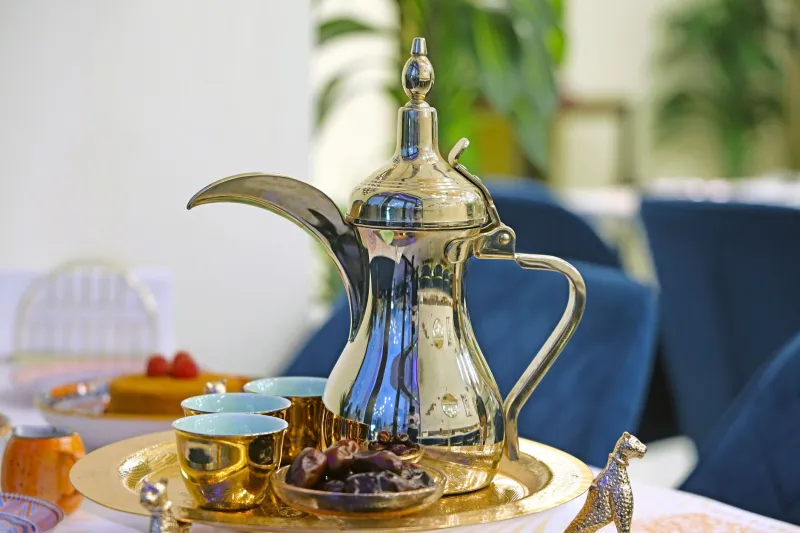
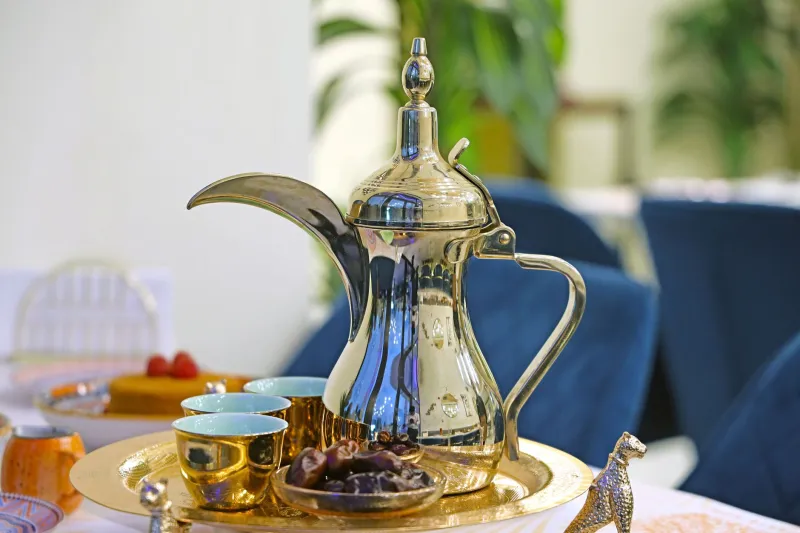
You don't need a dallah (the traditional long-spouted coffee pot) to start, though they're genuinely beautiful and increasingly available online and in Middle Eastern grocery stores across most major US cities. A small saucepan and some patience will get you started.
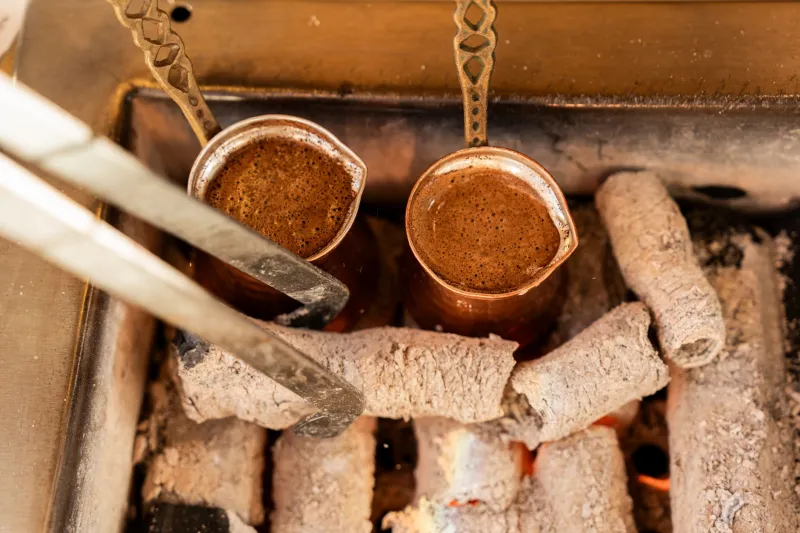
The coffee itself: Traditional qahwa uses lightly roasted green or pale gold coffee beans, which produce a flavor that's earthy, slightly grassy, and much gentler than your standard dark roast. If sourcing those feels like too big a leap at first, a medium-light roast ground coarser than usual works as an accessible entry point.
The spices: Cardamom is non-negotiable — it's the backbone of qahwa's flavor. A few green pods cracked open and simmered with the coffee transforms the whole character of the drink. From there, you can layer in a small pinch of saffron for warmth, a few cloves for depth, or a drop of rosewater stirred in just before serving. Start simple. The cardamom alone will already make your guests ask what they're drinking.
The cups: Small is the point. Traditional finjans hold about two to three ounces and are filled only partway. If you don't have them, espresso cups work fine. The small pour is what makes the refill ritual possible and meaningful — you can't do this with a 16-ounce mug.
The timing: Don't rush from one cup to the next. Let the first cup breathe for 20 to 30 minutes. Use the second pour as a natural mid-conversation anchor. Save the third for when the energy at the table starts to shift — when the conversation has gotten real and people are starting to talk about leaving without actually leaving.
The Social Magic Hidden in the Refill
One thing hosts consistently notice is how the act of pouring changes the dynamic. When you're the one walking around the table with the dallah — or even just a small pitcher — you're actively participating in the conversation's shape. You're choosing when to offer more, reading the room, making eye contact. Your guests are pausing, holding out their cups, briefly orienting toward you.
It sounds small. It isn't. In a culture where the host often disappears into the kitchen or gets absorbed into one corner of the room, this gives you a reason to move through the gathering intentionally. Multiple times. It's hosting as a verb rather than a setup.
And for guests, there's something genuinely grounding about a cup that gets refilled rather than one you just nurse until it's cold. It keeps you present. It gives you something to do with your hands during a lull. It connects the physical moment — tasting, warming up, smelling cardamom — to the social one.
Borrowing Respectfully
It's worth saying directly: this tradition comes from a specific cultural context, and that context is rich and meaningful. Qahwa hospitality in the Gulf and Arabian Peninsula isn't a dinner party trick — it's a deeply embedded expression of generosity, status, and community that has shaped social life for centuries.
The best way to bring this into your home is with some genuine curiosity about where it comes from. Learn the names. Understand why the sequence matters. If you have Middle Eastern friends or neighbors, ask them about their own family's version of the ritual — because like most living traditions, it varies beautifully by region and household.
What you're not doing is appropriating a fashion trend. You're engaging with one of the world's oldest and most thoughtfully designed hosting traditions and letting it make your table a better place to sit.
The Invitation Worth Accepting
The three-cup tradition persists because it works. It creates connection, it manages time, it gives a gathering shape. Those aren't things that have gone out of style — they're things most of us are quietly starving for every time we host or get hosted.
You don't have to overhaul your entire entertaining approach. Start with one dinner. Brew a small pot of cardamom coffee. Pour it in rounds. See what happens to the conversation.
Chances are, your guests will still be sitting there when the third cup comes around — and that's exactly the point.