Sworn to Silence: The Secret Spice Formulas That Define Qahwa Dynasties
Imagine a barbecue sauce recipe so sacred that your grandfather made you swear on a Quran before he whispered it to you. Now imagine that recipe being the thing that defines your family's reputation across an entire region — a formula that customers have traveled hours to taste, that weddings have been planned around, that rival coffee sellers have tried to reverse-engineer for decades. That's not a dramatic exaggeration. That's just Tuesday for some of the oldest qahwa roasting families in the Arab world.
For most Americans, cardamom is that interesting green pod you find in chai or occasionally in a fancy bakery. But inside the world of traditional qahwa, cardamom is currency. It's identity. And the specific way a family blends it with coffee — the ratio, the roast level, the secondary spices, the grind texture — can be more closely guarded than a pharmaceutical patent.
Why Spice Ratios Become Family Heirlooms
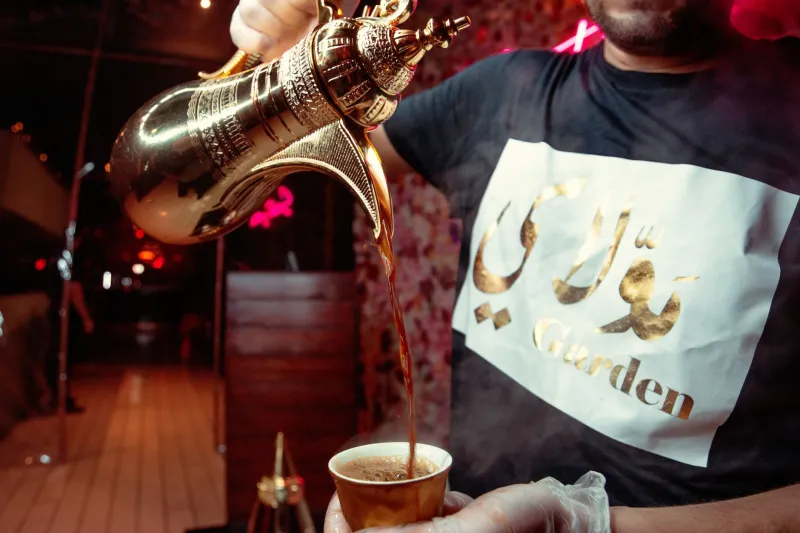
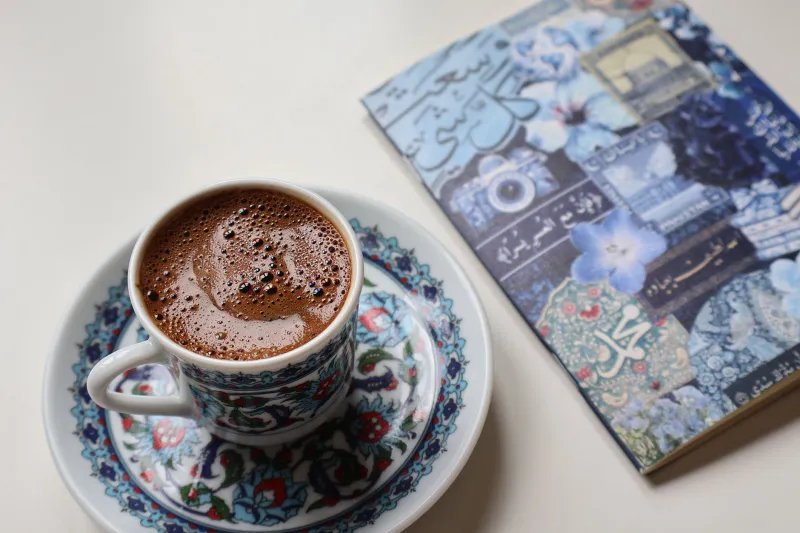
Qahwa isn't just coffee with cardamom tossed in. The traditional preparation involves a careful calibration of lightly roasted green or pale-gold coffee beans, cardamom pods or ground cardamom, and often secondary aromatics like saffron, cloves, or dried rose petals. The proportions shift dramatically depending on the region — Gulf-style qahwa tends to be lighter and more floral, while some Yemeni preparations lean into deeper roasts with more assertive spice profiles.
Those regional differences didn't happen by accident. They evolved over centuries as trading families and coffee merchants developed their own house styles, and those styles became calling cards. In cities like Riyadh, Jeddah, Muscat, and Sana'a, a coffee seller's reputation was literally built on flavor consistency. Customers came back not just for caffeine — they came back for that specific taste, the one they'd grown up with, the one that tasted like home.
Once a blend earned a loyal following, protecting it became a matter of economic survival. And so the secrecy began.
The Transmission Problem Nobody Talks About
Here's where things get genuinely complicated. Unlike wine or cheese production, where formulas eventually get documented and regulated, traditional qahwa blending has always been passed down orally — or more precisely, through demonstration. A father stands behind a roasting pan and his son watches. The son watches for years. Eventually, the son just knows how it's supposed to smell when the ratio is right.
There are no written recipes in most of these families. The knowledge lives in the hands and the nose of whoever learned it last.
That system worked beautifully for centuries. But the 21st century has introduced a pressure it wasn't designed to handle: younger generations who don't want to stand behind a roasting pan. Across the Gulf states and Yemen, the children and grandchildren of traditional qahwa merchants are pursuing careers in tech, finance, medicine — anywhere but the family coffee stall. And when the last person who holds the formula decides to retire or passes away without a willing student, the recipe doesn't just retire with them. It disappears entirely.
This isn't a hypothetical concern. Coffee historians and food anthropologists working in the region have documented blends that are simply gone — flavors that older community members remember vividly but that no longer exist anywhere in the world.
The Cardamom Variable Is More Complex Than You'd Think
For anyone outside this tradition, it might be tempting to assume that cardamom is cardamom — you either add more or less and that's the whole story. Experienced qahwa roasters will gently correct that assumption.
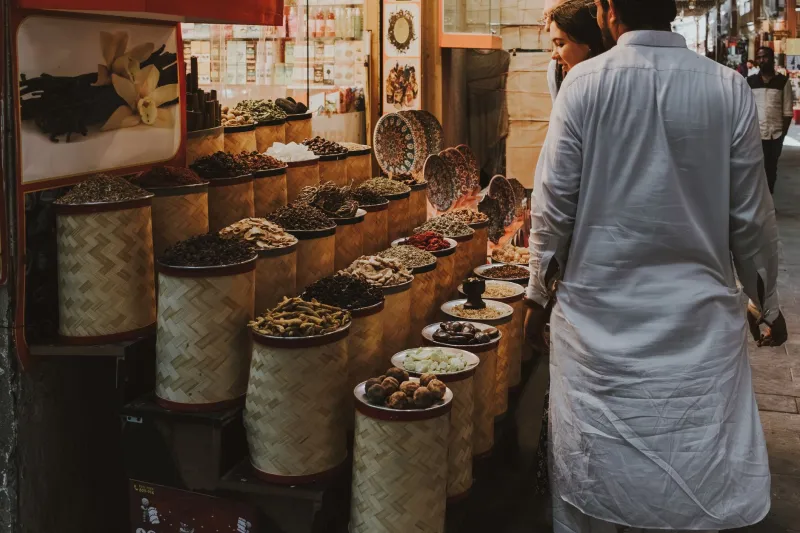
First, cardamom quality varies enormously. The most prized variety for qahwa comes from specific growing regions, and even within those regions, harvest year and processing method affect the essential oil content dramatically. A roaster who has been sourcing from the same Guatemalan or Indian supplier for decades has developed an intuitive feel for how much of that specific cardamom to use in order to hit the right aromatic threshold.
Second, the point at which cardamom is introduced during brewing matters. Some families add it to the grounds before the water hits. Others add it mid-brew. Others still use a cold-infusion technique for the cardamom separately, then combine. Each approach produces a noticeably different flavor profile, even if the quantity is identical.
Third — and this is the part that really separates masters from beginners — the ratio shifts depending on the coffee itself. A lighter, more grassy green coffee needs a different cardamom balance than a pale-gold roast that's picked up a bit more body. Knowing how to adjust on the fly, based on what the coffee is doing that particular batch, is the kind of skill that takes years to develop and is nearly impossible to encode in a written recipe.
What American Coffee Culture Is Just Starting to Understand
The specialty coffee movement in the US has spent the last two decades obsessing over single-origin beans, precise extraction temperatures, and gram-level measurements. That obsession has produced genuinely incredible coffee. But it has also produced a culture that tends to treat spice as an add-on — something you do to coffee when you want to make it "fun" or "festive."
Traditional qahwa roasters would find that framing almost incomprehensible. In their world, the spice blend isn't decoration. It's half the recipe. The coffee and the cardamom are in conversation with each other, and the roaster's job is to manage that conversation so that neither voice drowns out the other.
A handful of specialty importers and Middle Eastern food entrepreneurs in US cities — particularly in Dearborn, Houston, and parts of the New York metro area — are starting to bring this perspective into American coffee spaces. Some are working directly with Gulf roasting families to source pre-blended qahwa mixes that carry the authentic house ratios of specific producers. Others are experimenting with their own interpretations, though most are careful to distinguish their work from the traditional blends they're drawing inspiration from.
The Question of Preservation
There's an ongoing debate within Arab food culture about whether traditional qahwa formulas should be documented and archived before they vanish. Some families are open to the idea — they'd rather see the recipe preserved in some form than lost entirely. Others are adamantly opposed, arguing that the moment a formula is written down and shared, it stops being theirs.
That tension is real, and it doesn't have an easy resolution. Food heritage organizations have faced similar resistance when trying to document other oral culinary traditions around the world. The knowledge holders often feel, with some justification, that documentation is the first step toward commodification — and that once something is commodified, the cultural meaning drains out of it.
What's clear is that the window for even asking these questions is narrowing. The roasters who carry these formulas are aging. The apprentices who might have learned from them have largely moved on to other careers. And every year that passes without a transfer of knowledge is a year closer to a permanent loss.
For anyone who cares about what qahwa actually tastes like at its best — not the approximation you get from a grocery store blend, but the thing that made entire communities organize their social lives around a single coffee seller's preparation — that's a genuinely urgent problem.
The cardamom in your cup carries centuries of accumulated knowledge. The question is whether anyone will be around to keep carrying it.