The Words Around the Cup: A Friendly Arabic Coffee Glossary for Curious Guests
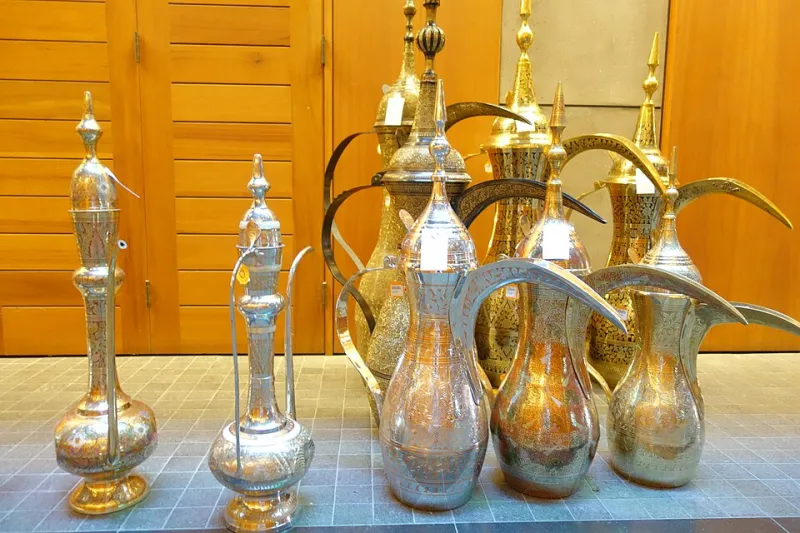
Photo: Abdulla Al Muhairi, CC BY 2.0, via Wikimedia Commons
Arabic coffee vocabulary is not a secret handshake. It is more like the labels on a kitchen drawer: once you know what is inside, you can ask better questions and receive better coffee. You do not need to roll every letter like a radio announcer. A friendly attempt, a smile, and real curiosity will carry you farther than a perfect accent. Here are 25 words you are likely to hear around qahwa in a Gulf household, a Levantine dinner party, or a Yemeni cafe in the US. Pronunciations are simplified for English speakers.
The Word at the Center
1. qahwa (QAH-wah) — Coffee, but specifically the spiced, often lightly roasted Arabic coffee served in small cups. In the Gulf, it is usually bitter and aromatic; in Yemen, the word can point toward a different brew and a different ritual. Cultural note: asking for qahwa is asking for a pause, not just a caffeine delivery system.
2. bunn (BOON) — Coffee beans. Traditional qahwa often uses lightly roasted beans, which is one reason it tastes more like tea, cardamom, and toast than like a dark espresso.
3. qishr (KISH-er) — A coffee-husk infusion, especially associated with Yemen. It can be spiced and served hot, and it is a reminder that coffee culture has always had more than one way to use the plant.
The Vessels and the Room
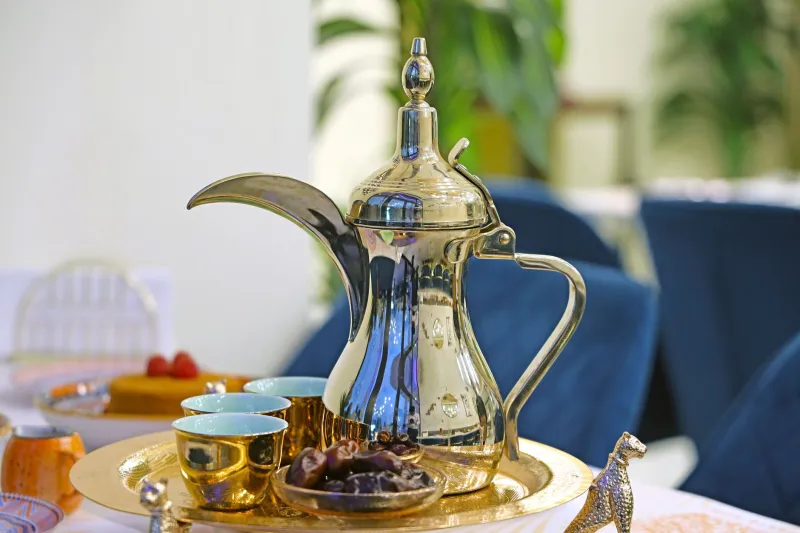
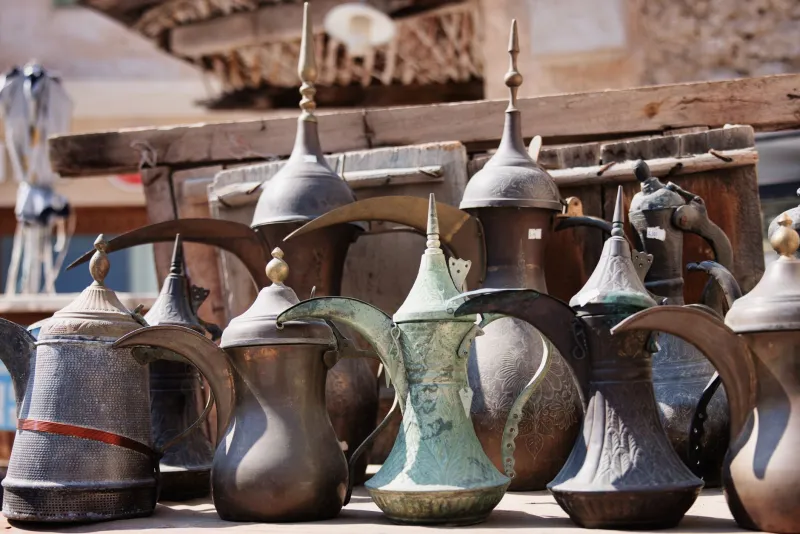
4. dallah (DAL-lah) — The long-spouted coffee pot. Brass is classic, stainless steel is common, and the shape tells you what is coming before you smell it. Cultural note: the dallah is hospitality made visible.
5. finjan (FIN-jan) — The small handleless cup. It looks like an espresso cup but lives in a different ritual. You hold it, sip it, and often receive a refill before you have thought to ask.
6. siniyya (sin-EE-yah) — The tray that carries the dallah and finjans. It turns coffee into a small procession. In many homes, the tray is as much a stage as the pot.
7. majlis (MAJ-lis) — The sitting room or gathering space where coffee is served. It can be a formal room or a corner of a living room, but the idea is the same: coffee has a place, and people come to it.
8. raghwa (RAGH-wah) — The thin foam on top of qahwa. It is not latte foam. It is a light crown that tells you the pot has been poured with care.
The Spice Rack
9. hail or hal (HAYL or HAHL) — Cardamom. You will hear both, and regional shorthand varies. The green pods are the signature spice in many Gulf qahwas, but the amount is a family decision, not a national law. Cultural note: never assume more cardamom equals more authentic.
10. za'faran (ZAH-fa-ran) — Saffron. A few strands can add color and a honeyed, almost floral note. It is a luxury ingredient, so its presence often says something about the occasion.
11. qurunful (qoo-ROON-ful) — Cloves. Warm, sharp, and easy to overdo. In qahwa, cloves are usually a background voice, not the lead singer.
12. qirfa (QIR-fah) — Cinnamon. Familiar to American palates, but not automatically in every qahwa. Some families use it; others leave it for desserts.
13. zanjabil (zan-JA-beel) — Ginger. A sharper warmth that shows up in some regional blends. If you taste it, the coffee is telling you where the recipe has traveled.
Sweetness and Style
14. sukkar (SOOK-kar) — Sugar. Traditional qahwa is often unsweetened, with dates doing the sweetening on the side. If sugar is offered, it is a choice, not a default.
15. bidoon sukkar (bee-DOON SOOK-kar) — Without sugar. A useful phrase if you want to sound specific without making a speech.
16. qahwa sada (QAH-wah SAH-dah) — Plain or unadorned coffee. The exact meaning shifts by region, but the general idea is simple: fewer additions, more focus on the coffee itself.
17. tamr (TAM-r) — Dates. The classic companion to qahwa. The sweetness of the date and the bitterness of the coffee are not opposites; they are a partnership.
The People and the Moves
18. dhaif (DAYF) — Guest. In qahwa culture, the guest is not an interruption. The guest is the reason the pot comes out.
19. mudhayyif (moo-DHAY-yif) — Host, or the person doing the pouring. The role comes with timing, attention, and a little theater.
20. ahlan wa sahlan (AH-lan wa SAH-lan) — Welcome. You will hear it at the door, but it also sets the tone for the coffee that follows.
21. tafaddal (ta-FAD-dal) — Please go ahead, or help yourself. It is an invitation with a hand gesture built in.
22. shukran (SHOOK-ran) — Thank you. Simple, useful, and never out of place.
23. khalas (KHA-las) — Enough, done, finished. In a coffee refill situation, it can be a gentle no. Tone matters more than the word.
24. sadad (sa-DAAD) — A polite signal that you have had enough, used in some hosting traditions. It is not universal, and families vary. If you hear it, treat it as a graceful close, not a rejection. Cultural note: in many homes, khalas or bas does the same job.
25. Allah yatik al-afiya (AL-lah yuh-TEEK al-ah-FEE-yah) — May God give you health. A warm thing to say after coffee or a meal. Cultural note: it compliments the host without evaluating the brew like a cafe review.
How to Use This List Without Making It Weird
You do not need to deploy all 25 terms in one evening. Pick two or three that fit the moment. Ask what spice is in the pot. Say shukran when the finjan is filled. If you are unsure whether a word is Gulf, Levantine, or Yemeni, ask. That question is usually more welcome than a confident guess.
The goal is not to pass as a local. The goal is to be a better guest: curious, respectful, and willing to sit for one more cup than you planned.